I Came Across a Theory This Week That Made Me Rethink Growth
This week I came across something called Jevons Paradox, and it genuinely stopped me for a moment.
The basic idea is simple. In the 1800s, steam engines became more efficient. They used less coal to produce the same output. The assumption at the time was that Britain would therefore burn less coal. Instead, the opposite happened. Coal consumption increased dramatically.
Why? Because efficiency made coal cheaper to use. Cheaper energy meant more factories, more production, more expansion. Efficiency didn’t reduce demand — it increased it.
That idea has been stuck in my head ever since, because we’re watching the same pattern unfold again today.
Look at AI. The promise is that it will save time, reduce workload, remove repetitive tasks. And it absolutely does those things. But what’s actually happening? People aren’t slowing down. They’re building more. More content, more products, more experiments, more businesses. Efficiency isn’t shrinking activity. It’s multiplying it.
And the more I thought about it, the more I realised this isn’t just about global technology shifts. It plays out every day in small businesses too.
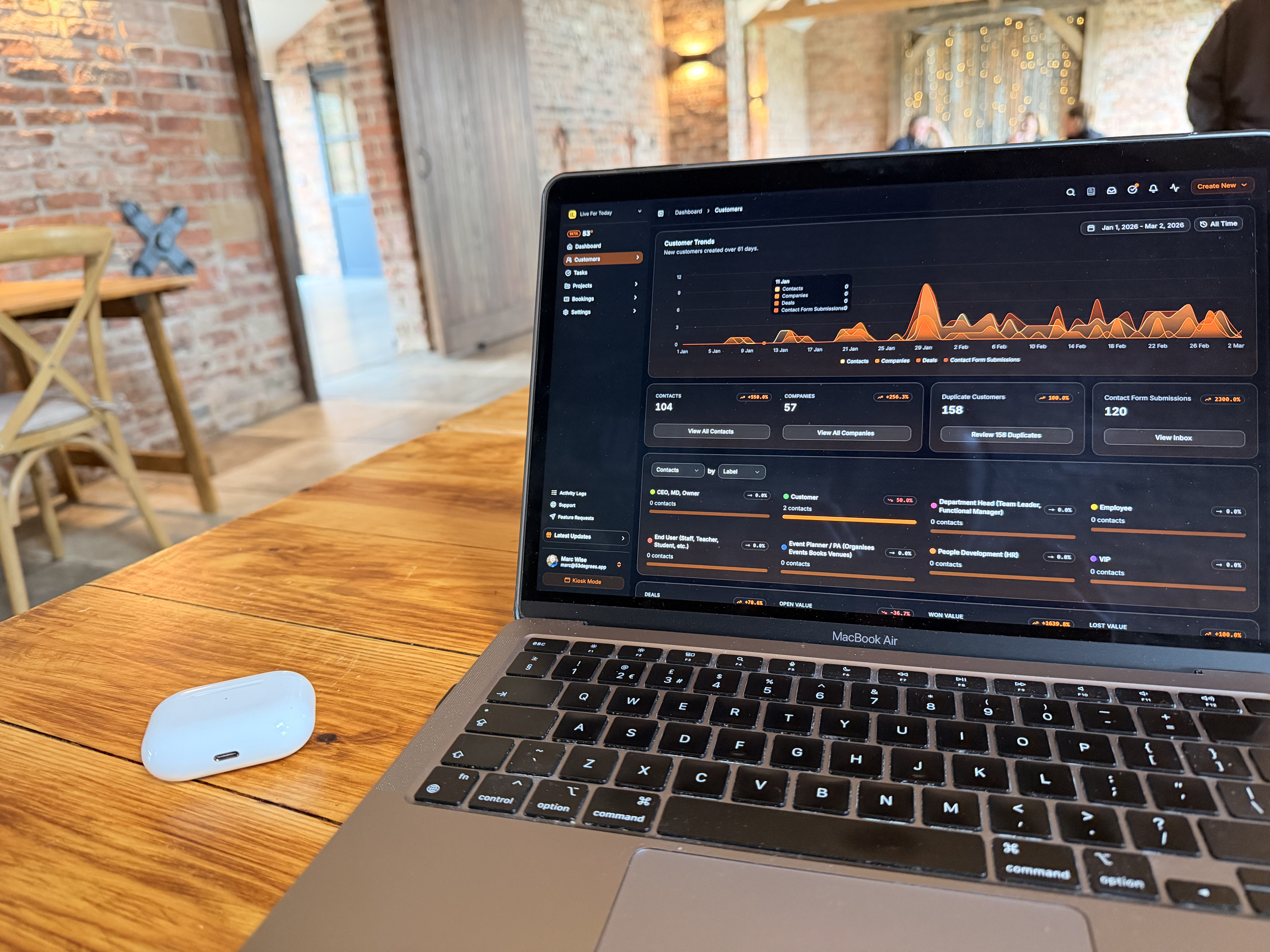 I spend a lot of time speaking to experience and adventure founders who are turning around £100k a year. They’re passionate. They deliver brilliant sessions. Customers love what they do. But behind the scenes, they’re overwhelmed. Enquiries are managed manually. Follow-ups are inconsistent. Admin piles up at night. They often tell me what they really want is “less stress” or “fewer hours.”
What’s interesting is what happens when their systems improve.
When bookings flow more smoothly, when customer data is organised properly, when follow-ups are structured and visible, they don’t suddenly decide to work less. They don’t step back and shrink the business. They start thinking bigger. They test corporate packages. They introduce off-peak offers. They invest in marketing with more confidence. They explore partnerships or second sites.
Because growth no longer feels dangerous.
That’s the part Jevons Paradox helped me understand more clearly. Messy systems don’t just create operational friction; they quietly limit ambition. When your business feels fragile, more success feels like more pressure. You subconsciously cap yourself to protect your energy.
But when things feel stable and structured, your identity shifts. You don’t just feel more efficient. You feel more capable.
This is why I don’t think the real conversation around efficiency — whether it’s AI or better systems — is about saving time. It’s about unlocking capacity. And capacity changes behaviour.
The real question isn’t, “How do I work less?” It’s, “What would I build if the backend of my business felt calm?”
That’s the thinking behind 53°. It isn’t about chasing the latest technology trend or promising that automation will magically give you your life back. It’s about removing friction in a way that allows you to grow without feeling like you’re going to break.
Because history suggests something important: when friction drops, ambition rises. And if that’s true, then the goal isn’t to slow down growth. It’s to build systems that can handle it when it comes.


:quality(80))
:quality(80))
:quality(80))
:quality(80))