If you run an experience business, you already know how hard it is to get a lead.
You've put in the work. The marketing, the content, the word of mouth, the late nights tweaking your website. And then it happens; someone lands in your inbox and says they're interested.
That moment should feel like the hard part is over.
For most businesses, it's actually where the opportunity quietly disappears.
The Lead That Got Away
Here's a scenario that will sound familiar.
You get an enquiry. You reply with something helpful, maybe a proposal, maybe a price. You end your message with "let me know if you have any questions" or "just give us a shout when you're ready to book."
And then you wait.
A day passes. Then three. Then a week.
You assume they've gone elsewhere, lost interest, or found something cheaper. You move on.
But here's the truth - in most cases, they haven't gone anywhere. Life just got in the way. Your email slipped into a junk folder. They meant to reply but got pulled into something else. They're still interested, they're just busy. And they're waiting for someone to make it easy.
That someone should be you.
The Ball Should Never Be in Their Court
This is something I feel strongly about, and it's something I've never allowed our team to do — finish a conversation without owning the next step.
Not "let me know." Not "whenever you're ready." Instead: "I'll follow up with you on Thursday." And then do it.
It sounds simple. But most businesses aren't doing it. They work incredibly hard to generate an enquiry, and then hand the responsibility of converting it back to the customer.
The data backs this up. The majority of sales happen after the third, fourth or fifth follow-up. Yet most businesses give up after one.
That gap — between where businesses stop chasing and where customers actually convert is where a huge amount of revenue disappears every single year.
Chasing isn't pestering. Done well, it's a service. It's telling someone: I haven't forgotten you, I still think this is right for you, and I'm here when you're ready. Most people genuinely appreciate the nudge. And the ones who were never going to book? They'll tell you quickly enough.
This Is Where Automation Changes Everything
Now, I know what you're thinking.
We're already stretched. We don't have time to manually follow up with every single enquiry.
That's exactly the point.
Because the right systems mean nothing gets missed; not because a robot is doing it for you, but because you've got a process that tells the right person to do the right thing at exactly the right time.
Automation, in this sense, isn't about removing the human. It's about making sure the human never drops the ball.
Here's what that looks like in practice.
A new enquiry comes in. Rather than sitting in an inbox hoping someone picks it up, it automatically creates a task — assigned, timestamped, ready to action. Your team knows exactly who owns it and when it needs a response.
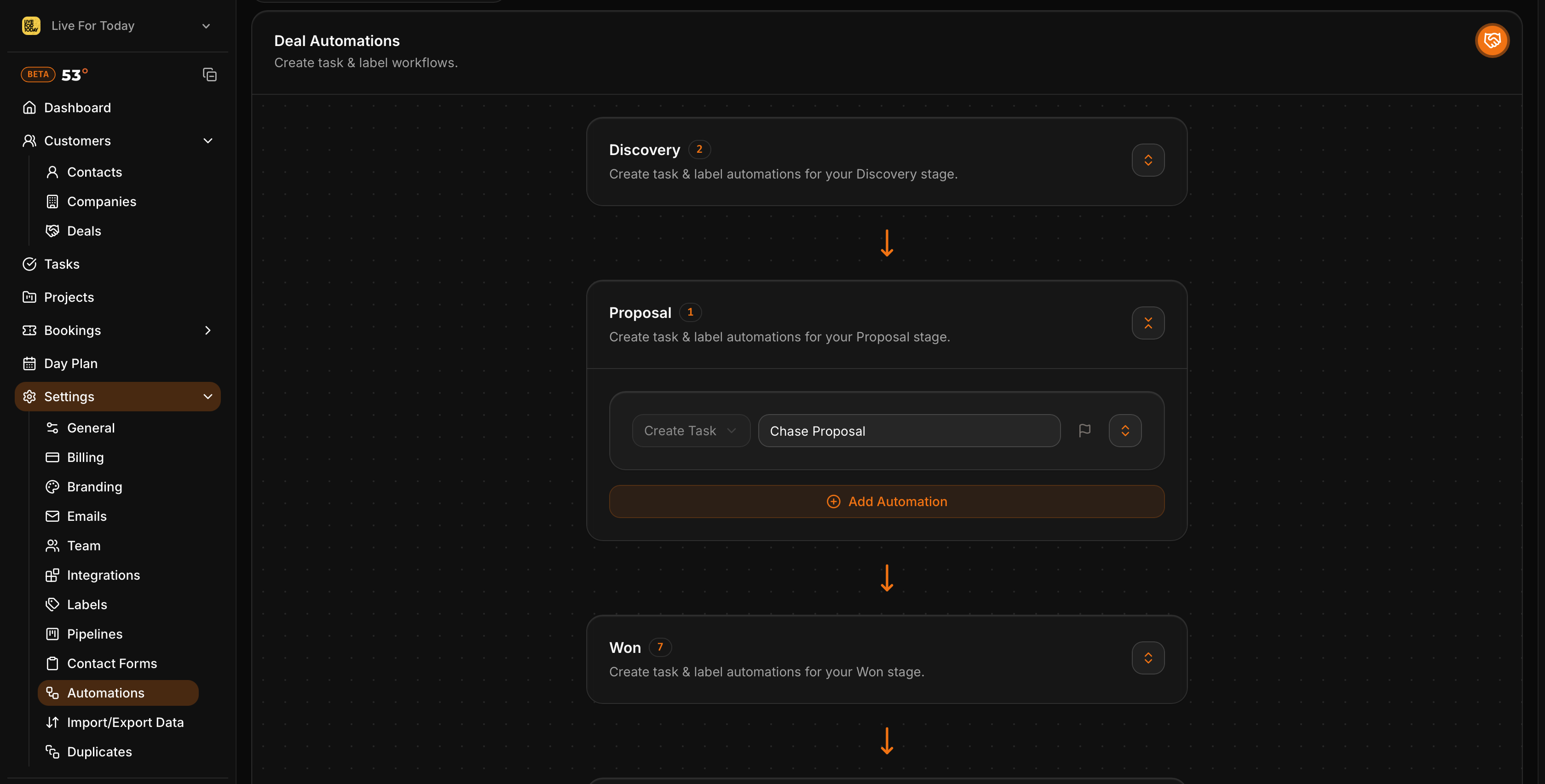
A proposal goes out. Three days later, if there's been no reply, a reminder lands with the right person on your team — chase this one. No one had to remember. Nothing slipped through because it was a busy week.
A booking is confirmed. A task is created to send joining information. Another fires the day before to confirm attendance. The customer gets a personal, human message at every step — because your system made sure someone sent it.
After the experience, a prompt reminds the team to check in, ask for a review, or log feedback. Six months later, a nudge appears to reach back out — because your past customers are your warmest audience, and most businesses never speak to them again.
The human touch is still there at every stage. The difference is that nothing relies on memory, mood, or a good week.
Consistency Is the Hidden Benefit
There's another advantage to this kind of automation that doesn't get talked about enough.
When follow-up relies entirely on individuals remembering, quality varies. Some leads get chased thoroughly. Others get buried because someone was off, the inbox was full, or it just wasn't that kind of week.
Good systems remove that inconsistency.
Every lead gets the same attention. Every customer moves through the same journey. Every opportunity is treated with the same care — regardless of what else is happening in the business.
That consistency builds trust. And trust is what converts enquiries into bookings.
Put Them Together
Chase and automation aren't two separate ideas — they work best as one system.
Your processes handle the structure. They make sure every lead is assigned, every follow-up is prompted, and every conversion triggers the next right action. Your team focuses their energy on the conversations that actually need a human — the big corporate proposal, the customer who wants to talk something through, the relationship worth investing in.
You stop losing leads because someone forgot. You stop dropping the ball at step three because there was no step three written down anywhere.
The businesses growing fastest right now aren't the ones with the biggest ad budgets. They're the ones doing more with what they already have — following up consistently, staying organised through every stage of the journey, and making sure their team always knows exactly what needs to happen next.
The leads are already there.
Most of the time, they just need someone to ask again.


:quality(80))
:quality(80))
:quality(80))
:quality(80))