Selling experiences is different from selling products.
Your customers cannot hold the experience in their hands before they buy. They cannot test it on the shelf, compare it in the same way as physical goods, or know exactly how it will feel until the day arrives.
That means every booking depends on confidence.
In other words, trust is not just helpful for experience businesses. It is essential.
When someone is deciding whether to book a kayak tour, a pottery workshop, a yoga retreat, a museum experience, or a corporate group activity, they are asking themselves one core question: can I trust this will be worth it?
That is where social proof matters most.
Experiences are bought on confidence
Experience businesses are selling something emotional and intangible.
Customers are buying anticipation, memory, quality time, personal development, fun, adventure, or connection.
But before any of that happens, they need reassurance.
They want to know:
Other people have booked this and enjoyed it
The business is organised and professional
The experience matches the promise
The booking process will be smooth
Their time and money are in safe hands
A well-written page can help. Great photography can help. Clear pricing and availability can help. But few things build trust as quickly as hearing from real customers who have already been there.
That is the power of social proof.
Social proof reduces uncertainty
Reviews work because they answer the doubts customers may not say out loud.
They show that the experience is real, that people enjoyed it, and that the business delivers what it promises.
For experience providers, this can make a direct difference at the point of booking.
Strong social proof can help:
Reduce hesitation
Increase conversion on booking pages
Support premium pricing
Build confidence for group organisers
Reassure first-time customers
Encourage repeat bookings and referrals
And in the experience economy, those signals matter even more because customers are often committing not just money, but also time, travel, coordination, and expectation.
A parent booking a family activity, a team organiser planning a group event, or a couple choosing a weekend experience all want one thing before they click book:
Confidence that they are making the right choice.
The real problem: collecting reviews consistently
Most experience businesses already know reviews are valuable.
The challenge is not understanding their importance. The challenge is finding the time to collect them properly.
When reviews are handled manually, they usually become one more task in an already busy week.
Someone has to remember who attended, decide when to follow up, send the email, choose where to direct the customer, and then somehow display those reviews back on the website.
That creates friction at every stage.
Manual review collection often means:
Follow ups happen inconsistently
Great feedback is missed
Teams spend time chasing past customers
Review collection sits outside the normal workflow
Customer feedback becomes disconnected from bookings and delivery
Displaying social proof requires extra tools, widgets, or workarounds
For many operators, the result is simple: they know reviews matter, but the process to get them is harder than it should be.
Trust works best when it is built into the system
This is where integrated reviews become powerful.
At 53°, reviews are not treated as a bolt-on feature or another separate tool to manage. They are built directly into the booking system, so feedback lives alongside the rest of the business.
That means reviews sit alongside your:
Customers
Orders
Locations
Products
Packages
Groups
Instead of juggling multiple systems, experience businesses can collect, manage, and use reviews from the same calm flow they use to convert bookings, deliver experiences, and grow their business.
That matters because trust-building should not depend on extra admin.
Removing the manual leg work
One of the biggest barriers to collecting reviews is the chase.
After a session, somebody has to follow up. If that process is manual, it is slow, inconsistent, and easy to miss, especially in busy periods.
The businesses delivering the best experiences are often the ones with the least time to send review requests one by one.
53° removes that leg work with automated email follow ups and a simple 1-click review process.
That means:
Customers can leave feedback quickly
Teams do not need to manually chase every review
Review collection becomes part of the normal customer journey
Feedback arrives faster and more consistently
The easier it is for customers to respond, the more likely they are to do it.
And the easier it is for operators to manage, the more likely review collection becomes a reliable part of the business rather than an occasional task.
A central hub for customer feedback
There is another advantage to integrated reviews beyond convenience: clarity.
When feedback lives in the same system as your sales and delivery data, it becomes much more useful.
You are not just collecting praise for marketing purposes. You are gaining a clearer picture of what customers think across the business.
That gives operators a much better view of where they are performing well and where they may need attention.
Maybe one location consistently gets stronger feedback.
Maybe one package stands out.
Maybe certain group experiences create especially memorable results.
When reviews are centralised, those patterns become easier to see and easier to act on.
Social proof where it matters most
Collecting reviews is only half the story. Displaying them properly is what turns feedback into bookings.
Social proof is most powerful when customers see it at the exact moment they are deciding whether to book. If they have to leave your site to search for proof elsewhere, you create unnecessary friction.
That is why integrated review display matters.
With 53°, reviews are clearly visible:
In the dashboard, giving operators instant visibility
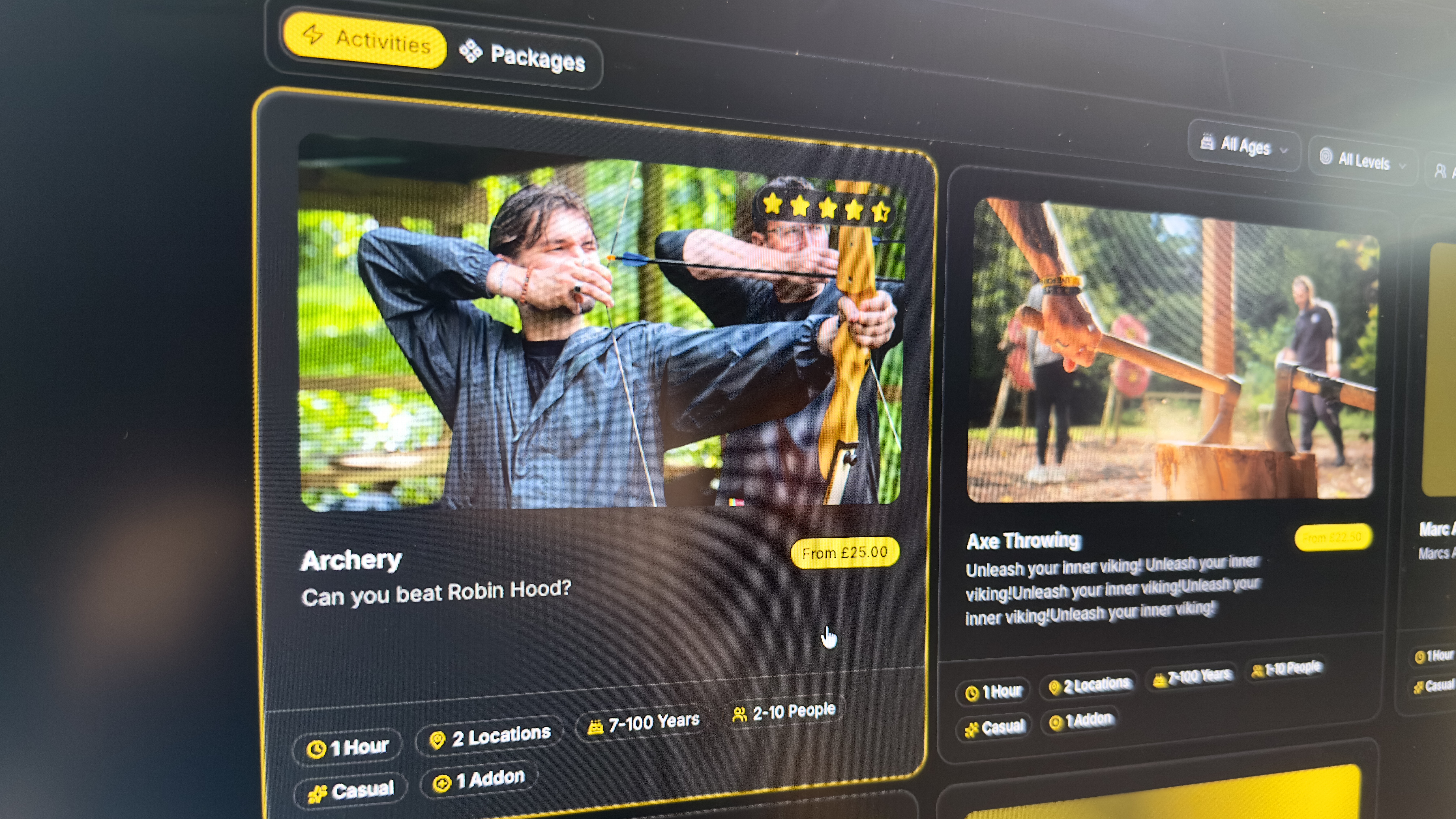
On the booking site, helping future customers book with confidence
This is important because social proof should not be hidden away or trapped in a separate platform. It should sit close to the products, packages, and booking journey it supports.
When reviews are presented alongside the offer, they help customers move from interest to trust, and from trust to action.
Better trust, fewer tools
A lot of software creates more complexity than it removes.
Experience businesses often end up navigating one app for bookings, another for payments, another for proposals, another for emails, another for customer management, and yet another for reviews.
Each extra system adds more friction, more cost, and more admin.
53° is built around a different idea: systems you do not need to navigate.
It brings sales, bookings, and delivery together so momentum builds and customers return.
Integrated reviews fit naturally into that approach. They are part of the all-in-one toolkit, not another disconnected add-on.
That gives businesses a simpler way to build trust without:
Manual follow-up emails
Janky Zapier automations
Separate review widgets
Ongoing decisions about where to host reviews
Disconnected customer feedback data
More tabs, tools, and admin
For operators, that means calmer weeks, more clarity, and more time spent on the work they actually enjoy.
Trust helps you convert, deliver, and grow
The best thing about social proof is that it does not only help at one stage of the customer journey.
It helps you:
Convert by reassuring new customers
Deliver by surfacing feedback that improves the experience
Grow by showing what works across locations, products, and packages
That makes reviews more than a marketing feature. They become an operational and strategic asset.
When feedback is easy to collect and easy to see, trust stops being something you hope customers feel. It becomes something your system helps you build every day.


:quality(80))
:quality(80))
:quality(80))
:quality(80))